

University of Utah J. Willard Marriott Library
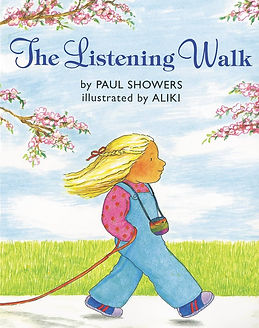
"The Listening Walk" by Paul Showers
Objective
Students will practice slowing down and paying attention to the sounds around them. They will identify,
describe, and reflect on sounds they might normally overlook.
1. Before Reading — Tune In
Ask students to sit completely quietly for 30 seconds and listen.
Afterward, ask:
-
What did you hear?
-
What was the closest sound?
-
What was the farthest sound?
-
Did you notice anything you hadn't noticed before
Explain that today we're going to practice listening on purpose.
2. Read The Listening Walk
Read The Listening Walk aloud.
As you read, encourage students to notice:
-
What sounds does the girl hear?
-
What is making each sound?
-
How does the author turn sounds into words?
-
Why do you think the girl and her father stay quiet while they walk?
You can invite students to imitate some of the sounds in the story.
3. Take Your Own Listening Walk
Tell students:
We're going to take a listening walk of our own. Our goal isn't to get somewhere; our goal is to notice.
Walk quietly around the school, playground, neighborhood, or other outdoor space for about 10–15minutes.
Encourage students to listen for:
-
Nature sounds
-
People sounds
-
Machine or traffic sounds
-
Loud and soft sounds
-
Near and far sounds
-
Repeating sounds
-
Sounds they can't immediately identify
Stop two or three times along the way and have everyone stand completely still and listen.
4. Share What You Heard
When you return, make a class list of the sounds everyone noticed.
Ask:
-
What sound surprised you?
-
What was the quietest sound you heard?
-
What was the loudest?
-
Did anyone hear something that no one else noticed?
-
Were there sounds you liked? Sounds you didn't like?
-
What happens when we intentionally pay attention to the world around us?
Optional Follow-Up
Have each student draw or write about one sound they want to remember from the walk.
Older students can create a short "soundscape" using descriptive language or onomatopoeia to recreatetheir listening walk.
Closing thought: You don't have to go somewhere special to find interesting things. Sometimes you just have to become quiet enough to notice them.